

Marketers create countless new campaigns every year. Recent Gartner data reveals a shocking reality regarding these efforts. 87% of marketers report experiencing issues with campaign performance in the past 12 months. Poor performance forces early termination frequently. A little under half (45%) report potentially needing to terminate a campaign early due to poor performance. Teams launch campaigns hoping for viral success and massive revenue generation. They routinely ignore the foundational steps required to secure that success. The root cause of failure usually happens long before the campaign goes live. A weak foundation guarantees poor public results. Successful execution requires excellent marketing project management. Teams must understand why failures occur early to prevent budget waste. Identifying the flaws in the pre-launch strategy saves millions of dollars. Here are the top reasons why marketing campaigns fail.
1. The Trap of Vague Goals and Untested Positioning
Brands often launch products based on internal assumptions. They skip rigorous market testing in favor of speed. Quibi raised approximately 1.8 billion dollars to build a mobile-only streaming service. The executive team assumed commuters wanted premium short-form content for quick breaks. The April 2020 launch coincided exactly with global COVID-19 lockdowns. Commuting disappeared overnight across the globe. Consumer viewing habits shifted immediately to large television screens and long-form content.
Quibi focused its marketing on the platform’s unique format rather than specific hit shows. The application completely lacked social sharing features. These sharing features drive organic discovery and virality on competing platforms like TikTok and YouTube. Quibi shut down within six months of its launch. The company cited low subscriber growth despite its massive initial funding. Their foundational assumptions were completely untested against shifting real-world behavior.
Preventing this disaster requires a rigorous campaign planning process. Teams must test strategic assumptions against real audience habits in real time. A solid marketing operations strategy forces teams to validate ideas before spending production budgets. Strong marketing project management creates mandatory checkpoints for this exact type of validation. Failure is baked in when teams ignore usage behavior and environmental context.
Quibi focused its marketing on the platform’s unique format rather than specific hit shows. The application completely lacked social sharing features. These sharing features drive organic discovery and virality on competing platforms like TikTok and YouTube. Quibi shut down within six months of its launch. The company cited low subscriber growth despite its massive initial funding. Their foundational assumptions were completely untested against shifting real-world behavior.
Preventing this disaster requires a rigorous campaign planning process. Teams must test strategic assumptions against real audience habits in real time. A solid marketing operations strategy forces teams to validate ideas before spending production budgets. Strong marketing project management creates mandatory checkpoints for this exact type of validation. Failure is baked in when teams ignore usage behavior and environmental context.
2. Skipping Cultural and Contextual Review
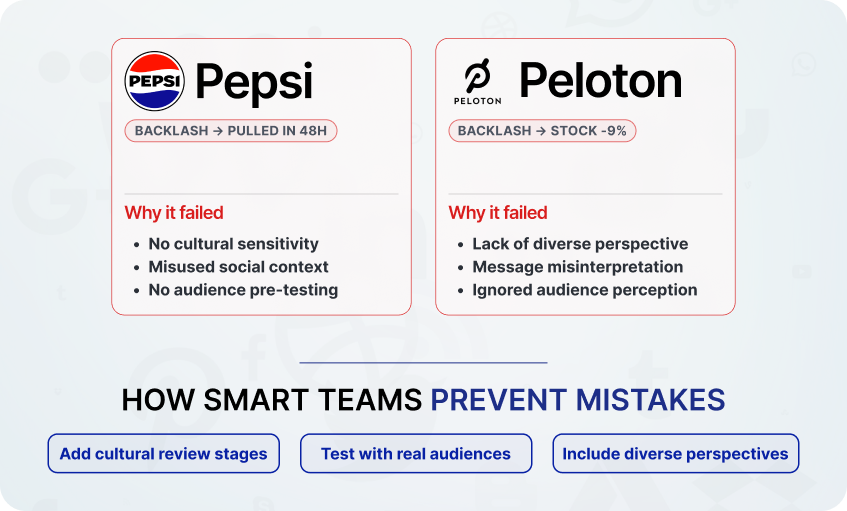
Tone-deaf messaging destroys brand reputation instantly. Brands bypass essential cultural sensitivity checks in a rush to hit launch dates. Pepsi launched a highly controversial "Live for Now" ad in April 2017. The commercial featured Kendall Jenner leaving a photo shoot to join a generic street protest. She offers a can of Pepsi to a police officer to resolve the tension. The public immediately accused Pepsi of trivializing serious movements like Black Lives Matter for pure commercial gain.
Pepsi pulled the ad from television and the internet in less than 48 hours. The campaign failed at the strategy and review stage. The company executed zero rigorous cultural sensitivity checks. They lacked a diverse stakeholder review panel. They conducted no pre-testing with real audiences to flag the tone-deaf concept. Proper creative workflow management builds mandatory cultural review stages into the timeline.
Peloton faced a massive contextual issue in November 2019. They released a holiday commercial featuring a husband gifting his wife a stationary bike. The wife records a year-long video diary of her fitness journey. Viewers on Twitter called the ad creepy and disturbing. The public implied the messaging was sexist and classist. The audience suggested the husband wanted his wife to lose weight. Peloton stated they were disappointed that the spot was misinterpreted. This public backlash coincided directly with a stock drop of more than 9% in a single day.
The company relied entirely on its internal intent of celebrating a wellness journey. They failed to pressure-test the narrative with diverse audience segments. Effective project management for marketing teams prevents this dangerous echo chamber effect. Leaders must enforce strict review protocols within their campaign planning process.
Pepsi pulled the ad from television and the internet in less than 48 hours. The campaign failed at the strategy and review stage. The company executed zero rigorous cultural sensitivity checks. They lacked a diverse stakeholder review panel. They conducted no pre-testing with real audiences to flag the tone-deaf concept. Proper creative workflow management builds mandatory cultural review stages into the timeline.
Peloton faced a massive contextual issue in November 2019. They released a holiday commercial featuring a husband gifting his wife a stationary bike. The wife records a year-long video diary of her fitness journey. Viewers on Twitter called the ad creepy and disturbing. The public implied the messaging was sexist and classist. The audience suggested the husband wanted his wife to lose weight. Peloton stated they were disappointed that the spot was misinterpreted. This public backlash coincided directly with a stock drop of more than 9% in a single day.
The company relied entirely on its internal intent of celebrating a wellness journey. They failed to pressure-test the narrative with diverse audience segments. Effective project management for marketing teams prevents this dangerous echo chamber effect. Leaders must enforce strict review protocols within their campaign planning process.
3. Flawed Research and Ignoring Emotional Data
Quantitative data mislead teams when the underlying research design is flawed. Coca-Cola spent approximately 4 million dollars on taste tests in 1985. They tested the new formula with over 200,000 participants. The isolated sip tests suggested consumers preferred the sweeter "New Coke" formula over the original. The company launched the new product and discontinued the classic formula.
The launch triggered massive public outrage from highly loyal customers. Only an estimated 30,000 to 40,000 of the original taste testers actually purchased the new product. Coca-Cola optimized their research for taste in complete isolation. They ignored brand loyalty completely. They failed to measure the deep emotional attachment consumers had to the original product. Removing a beloved product from the shelves caused an immediate revolt.
A successful marketing operations strategy looks at holistic product-market fit. Teams must avoid research designs that merely confirm internal biases. Good marketing project management demands comprehensive data analysis covering both logic and emotion. Leaders must evaluate emotional metrics alongside standard quantitative data. Change management is a critical component of launching a new variation of an existing product.
The launch triggered massive public outrage from highly loyal customers. Only an estimated 30,000 to 40,000 of the original taste testers actually purchased the new product. Coca-Cola optimized their research for taste in complete isolation. They ignored brand loyalty completely. They failed to measure the deep emotional attachment consumers had to the original product. Removing a beloved product from the shelves caused an immediate revolt.
A successful marketing operations strategy looks at holistic product-market fit. Teams must avoid research designs that merely confirm internal biases. Good marketing project management demands comprehensive data analysis covering both logic and emotion. Leaders must evaluate emotional metrics alongside standard quantitative data. Change management is a critical component of launching a new variation of an existing product.
4. Failing to Validate with the Core User
Building a product without consulting the end user guarantees failure. Microsoft launched the Kin One and Kin Two phones in 2010. They positioned these devices specifically for younger, highly active social media users. The phones offered browser access and basic social integrations. They completely lacked support for actual downloadable applications. Hidden data costs frustrated the core demographic.
Poor market research led to a massive mismatch between product features and user needs. The pricing structure failed to align with the target audience's budget. Microsoft discontinued the entire product line within just a few months. The marketing messaging promised a highly integrated social experience. The pre-launch research never actually validated those core features with social media natives.
This represents a massive failure in project management for marketing teams. Teams need strict creative workflow management to align product promises with actual technical capabilities. Overpromising and underdelivering destroys consumer trust immediately. A highly structured campaign planning process ensures marketing messaging matches reality perfectly.
Poor market research led to a massive mismatch between product features and user needs. The pricing structure failed to align with the target audience's budget. Microsoft discontinued the entire product line within just a few months. The marketing messaging promised a highly integrated social experience. The pre-launch research never actually validated those core features with social media natives.
This represents a massive failure in project management for marketing teams. Teams need strict creative workflow management to align product promises with actual technical capabilities. Overpromising and underdelivering destroys consumer trust immediately. A highly structured campaign planning process ensures marketing messaging matches reality perfectly.
Overcoming Overconfidence and Insight Denial
Many marketing teams suffer from a phenomenon known as insight denial. TGM Research highlights this specific pattern in product-launch failures. Teams use market research exclusively to confirm their existing beliefs. They actively ignore data that challenges their initial concepts. This overconfidence destroys campaigns before they even reach the public domain.
Objective data must drive the entire marketing operations strategy. Leaders have to build organizational systems that reward critical feedback and dissent. Excellent marketing project management involves creating safe spaces for team members to flag potential issues early. Managers should encourage testing phases that actively try to break the campaign concept. Finding the flaws internally is significantly cheaper than finding them in the public market.
Objective data must drive the entire marketing operations strategy. Leaders have to build organizational systems that reward critical feedback and dissent. Excellent marketing project management involves creating safe spaces for team members to flag potential issues early. Managers should encourage testing phases that actively try to break the campaign concept. Finding the flaws internally is significantly cheaper than finding them in the public market.
Structuring a Bulletproof Pre-Launch Framework
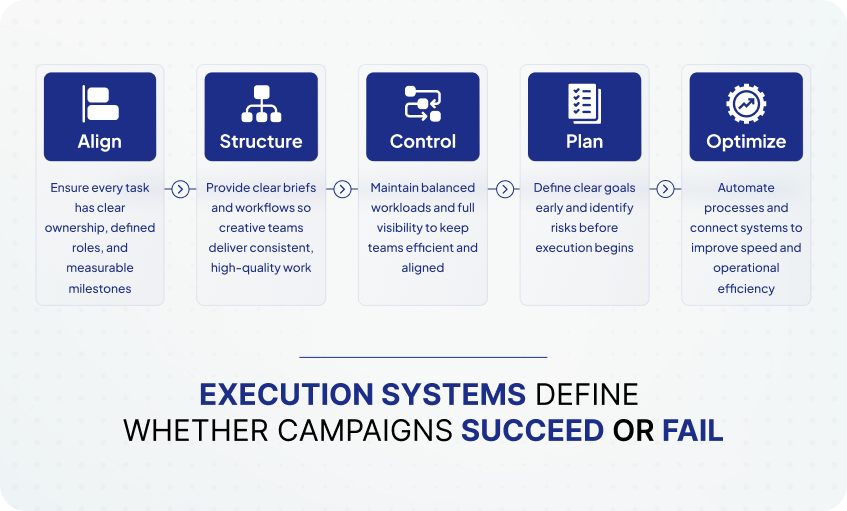
Campaign success requires a complete operational overhaul. Teams need to implement systematic checks and balances across all departments. You can structure your internal operations to guarantee higher success rates.
1. Prioritize Marketing Project Management
Chaos in the planning stage translates directly to chaos in the open market. Consistent marketing project management keeps cross-functional teams aligned on core business objectives. Managers must assign clear ownership for every single task and deliverable. Effective marketing project management eliminates the operational confusion that leads to missed deadlines. Every stakeholder must understand their specific role and daily responsibilities. Reliable marketing project management tracks progress against rigid milestones to ensure on-time delivery.
2. Optimize Creative Workflow Management
Brilliant creative work requires highly structured execution. Proper creative workflow management ensures artists and copywriters receive clear, comprehensive briefs. Teams avoid endless revision loops through clear, documented communication channels. Streamlined creative workflow management gives creators the precise time they need to produce high-quality assets. Rushed creative work always leads to sloppy execution and missed cultural nuances.
3. Empower Project Management for Marketing Teams
Specialized marketing units require specialized operational systems. Dedicated project management for marketing teams tools provide leadership with complete visibility into resource allocation. Managers can prevent employee burnout by balancing workloads effectively across the department. Strategic project management for marketing teams connects daily micro-tasks to overarching quarterly business goals.
4. Refine the Campaign Planning Process
A documented roadmap prevents strategic drift during long production cycles. Every successful public launch starts with a meticulous campaign planning process. Teams must define clear success metrics before creating any visual assets. The early planning stage is the absolute best time to identify potential public relations risks.
5. Fortify Your Marketing Operations Strategy
Scalable success depends heavily on operational maturity. A modern marketing operations strategy integrates technology to automate repetitive administrative tasks. This efficiency gives strategic teams more time for high-level thinking and market analysis. Operations professionals ensure data flows seamlessly between the sales, product, and marketing departments
The Essential Pre-Launch Checklist
Launch day should be a celebration of hard work. It should never be a day of panic and crisis management. Teams can secure their public success by following a strict, uncompromising checklist.
- Define clear objectives: Establish exact, measurable key performance indicators before spending any budget.
- Conduct holistic research: Move beyond superficial surveys to understand actual human behavior and context.
- Pressure-test concepts: Put your ideas in front of diverse audience segments to find weak points.
- Implement cultural reviews: Mandate sensitivity checks with diverse stakeholders to avoid tone-deaf messaging.
- Align messaging to reality: Ensure the marketing promises match the actual product capabilities perfectly.
- Embrace negative feedback: Look for data that proves your idea wrong during the testing phase.
Following these exact steps requires disciplined, daily execution. Strong marketing project management turns this theoretical checklist into standard operating procedure. Teams that skip these steps risk becoming another expensive negative case study. Professional marketing project management is the ultimate safeguard against preventable corporate disasters.
- Define clear objectives: Establish exact, measurable key performance indicators before spending any budget.
- Conduct holistic research: Move beyond superficial surveys to understand actual human behavior and context.
- Pressure-test concepts: Put your ideas in front of diverse audience segments to find weak points.
- Implement cultural reviews: Mandate sensitivity checks with diverse stakeholders to avoid tone-deaf messaging.
- Align messaging to reality: Ensure the marketing promises match the actual product capabilities perfectly.
- Embrace negative feedback: Look for data that proves your idea wrong during the testing phase.
Following these exact steps requires disciplined, daily execution. Strong marketing project management turns this theoretical checklist into standard operating procedure. Teams that skip these steps risk becoming another expensive negative case study. Professional marketing project management is the ultimate safeguard against preventable corporate disasters.
Conclusion
Most marketing campaigns fail silently in the boardroom. They fail when teams ignore context and skip vital user validation. The Gartner statistics prove that current industry approaches are fundamentally broken. Too many campaigns face early termination due to poor upfront performance. Brands like Quibi and New Coke provide incredibly expensive lessons in what to avoid. Success demands rigorous testing and objective analysis of real-world data. Teams must embrace structured operational processes to survive in highly competitive markets. Superior marketing project management transforms risky ideas into predictable revenue generators.

Written by / Author
Manasi Maheshwari
Found this useful? Share With
Top blogs
Most Read Blogs
Wits Innovation Lab is where creativity and innovation flourish. We provide the tools you need to come up with innovative solutions for today's businesses, big or small.
© 2026 Wits Innovation Lab, All rights reserved
Crafted in-house by WIL’s talented minds